
Fitness for Every Age: How Your Exercise Should Change Over Time
Most people think fitness is a young person's game.
The truth is that exercise becomes more important, not less, as we age.
The goal isn't to train the same way at 15, 35, and 75. The goal is to adjust your approach so your body stays strong, capable, and healthy throughout every stage of life. Regular exercise helps maintain muscle, preserve bone density, improve heart health, support mental well-being, and increase quality of life at any age.
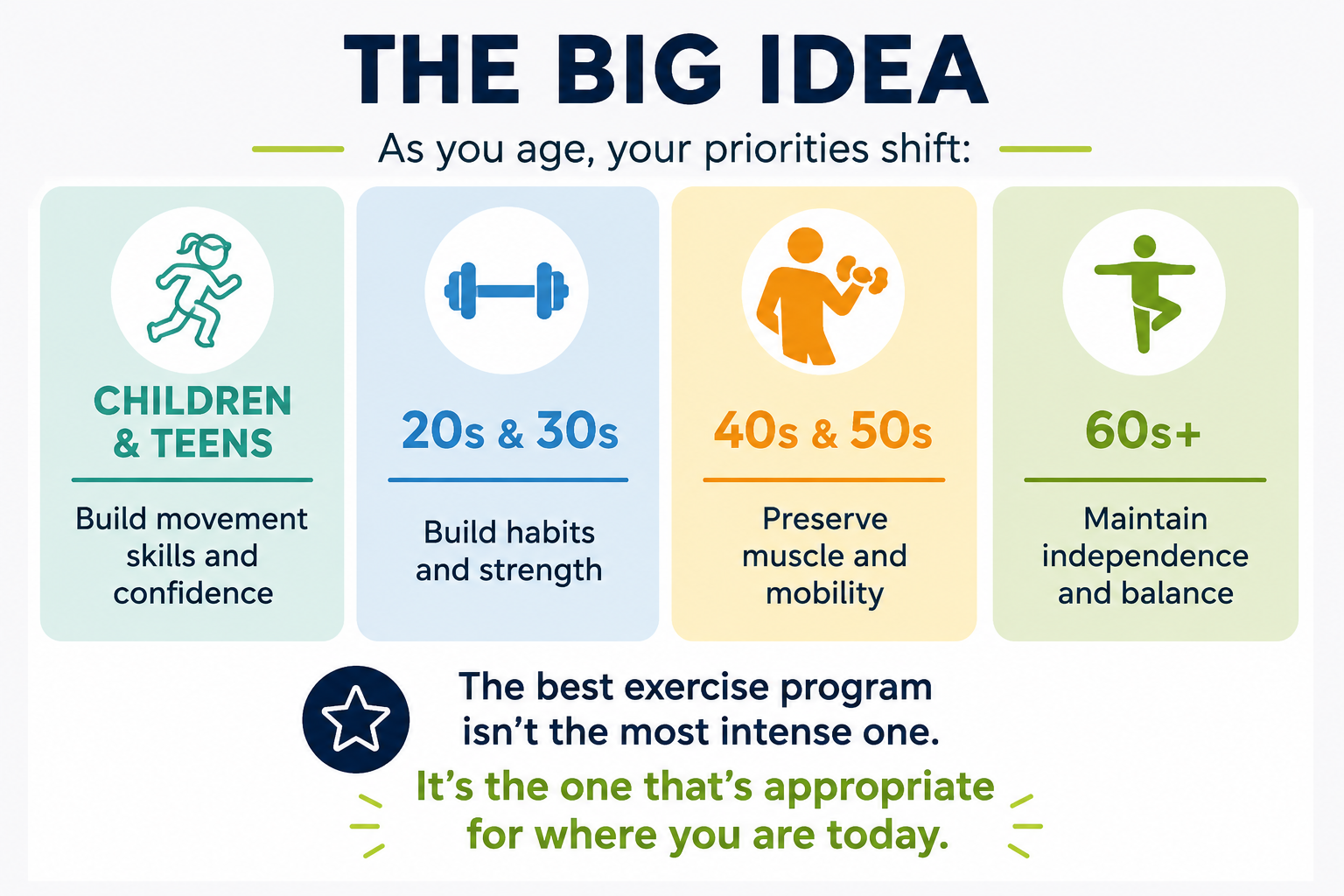
Children & Teens: Build the Foundation
Goal:
Develop coordination, strength, confidence, and a love for movement.
Focus On:
Running
Jumping
Climbing
Playing sports
Recreational activities
Age-appropriate strength training
Key Takeaway:
Don't worry about specialization too early. Encourage a variety of activities that make movement fun. Kids who enjoy being active are more likely to stay active for life.
Your 20s & 30s: Build Habits That Last
Goal:
Create a sustainable fitness routine before life gets busier.
Focus On:
Strength training
Cardiovascular exercise
Recreational sports
Finding activities you genuinely enjoy
Common Challenge:
Work, family, and responsibilities start competing for your time.
Key Takeaway:
Consistency matters more than perfection. A simple program you can stick to beats the "perfect" program you quit after three weeks.
Your 40s & 50s: Protect What You've Built
Goal:
Maintain muscle mass, bone density, and mobility.
Focus On:
Strength training 2-3 times per week
Regular cardiovascular exercise
Mobility and flexibility work
Recovery and sleep
What Changes?
You may notice:
Slower recovery
Slight decreases in muscle mass
More stiffness after inactivity
Key Takeaway:
Strength training becomes increasingly valuable during this stage. The stronger you stay now, the easier daily life becomes later.
Your 60s and Beyond: Stay Strong, Capable, and Independent
Goal:
Maintain function, balance, and independence.
Focus On:
Strength training
Walking
Swimming
Cycling
Balance exercises
Flexibility work
Why It Matters:
Falls are one of the biggest threats to long-term independence. Balance and strength training help reduce that risk while improving confidence in daily activities.
Key Takeaway:
It is never too late to start. Even people who have been inactive for years can experience significant improvements in strength, energy, mobility, and overall health through a well-designed exercise program.
Three Principles That Matter at Every Age
1. Strength Train
Muscle is one of the best predictors of long-term health and function.
2. Keep Moving
Walking, biking, swimming, hiking, and recreational activities all count.
3. Adapt as You Age
The goal isn't to do what you did at 20.
The goal is to keep doing the things you love at 80.
The Bottom Line
Your exercise program should evolve as your life changes.
At every age, the fundamentals remain the same:
Move regularly
Build strength
Maintain mobility
Challenge yourself appropriately
Stay consistent
Fitness isn't about staying young.
It's about staying capable.
And that's a goal worth pursuing at every age.
Where Should You Focus Right Now?
No matter your age, the most effective exercise program is the one that meets you where you are today.
Whether your goal is building confidence, improving strength, staying active with your family, or maintaining independence for years to come, your training should reflect the demands of your current season of life.
If you're not sure where to start, we'd love to help. Schedule a free No Sweat Intro and we'll discuss your goals, your health history, and what an effective plan could look like for you.
The best time to start isn't when conditions are perfect. It's when you're ready to take the next step.
Ready to get started? Book your (No Cost) No Sweat Intro today.
Continue Reading
The Fitness Success Pyramid
Consistency beats perfection. Learn the four foundational principles that drive long-term results and how to apply them at any age.
Train Through the Mess
Life is busy. Travel, work, kids, holidays, and setbacks happen. Discover how adaptability—not perfection—is often the key to long-term success.